
 Lab or natural?
 Find a ring size
 Buying on 47th Street
Guide / Ring too loose
My ring is too loose: resize, beads or a guard?
If the ring is too big all the way around, resize it. If it fits but spins or slides because the stone is heavy or your knuckle is wide, sizing beads, a spring insert or a guard usually fix it without cutting the band.
- Loose, or just spinning?
- The four fixes
- The fixes side by side
- Rings that cannot be resized
- When to wait before you fix it
A ring that slips off when you wash your hands, or turns so the stone sits in your palm, is one of the most common things people bring to a jeweler. All four fixes below are bench work Ben does as part of ring repair and resizing, and the right one depends on why the ring is loose, not only how loose it is.
Loose, or just spinning?
These are two different problems, and they need different fixes.
Too big. The ring slides up and down the finger, leaves a gap you can see, and comes off with no resistance at the knuckle. Making it smaller is the honest fix.
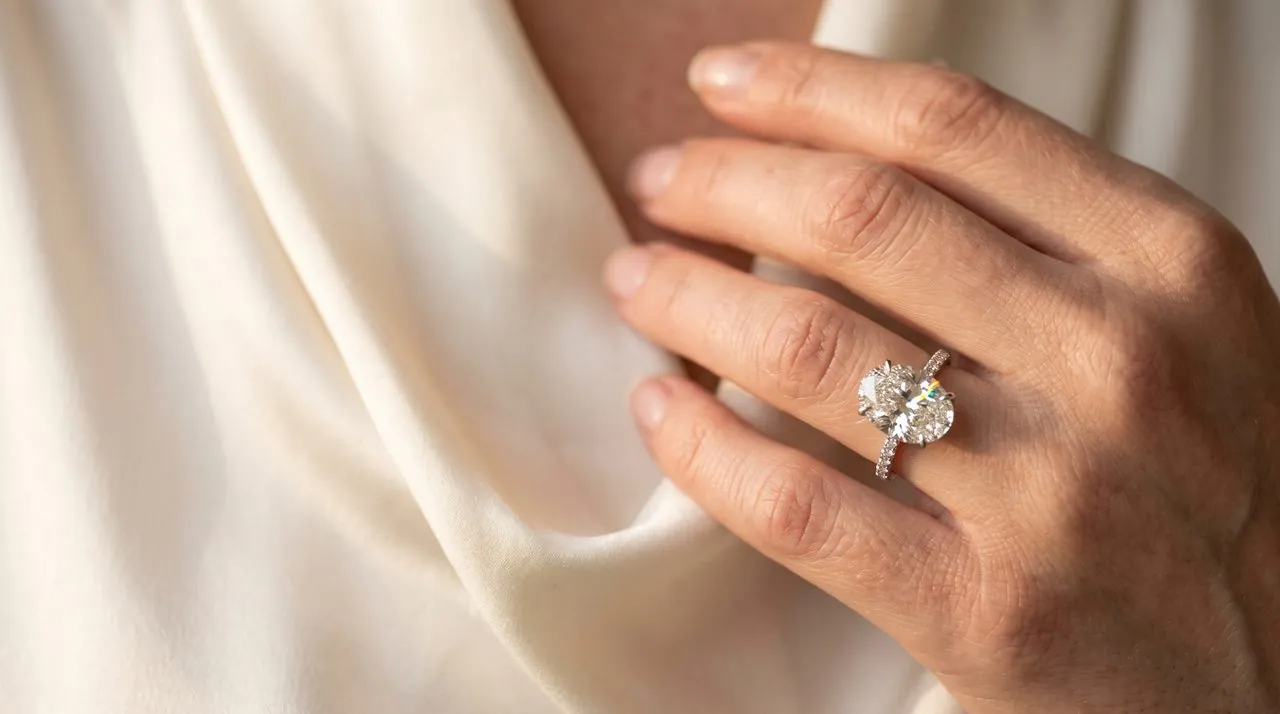
Spinning. The ring is snug at the base of the finger and you have to push it over the knuckle, but once it is on, it rolls round so the stone tips sideways. That is usually weight, not size. A ring with a tall setting and a large stone is top-heavy, and gravity pulls the heavy part down. Sizing it smaller often just makes it hard to get on, and it still spins.
Here is something you learn at the bench: the shape of the band matters as much as the size. A band that is round on the inside rolls easily. A band that is flatter or slightly squared at the bottom, sometimes called a European shank, sits still on the finger at the same size. A thin band under a heavy head spins more than a thicker one, so a worn-thin shank can make a ring that used to sit straight start to turn.
The four fixes
1. Resizing
The jeweler cuts the band at the bottom, takes out a small piece of metal (or adds one to go larger), solders the join and polishes it until the seam disappears. On a plain gold or platinum band, done well, you cannot see where it was cut. White gold is usually plated with rhodium, so it gets replated afterwards to match. Rings with stones on top only are usually fine, because the work happens at the bottom of the band, far from the stones.
If the band is worn thin at the bottom, replacing that part of it (a new shank) can be better than cutting it again.
2. Sizing beads
Two small balls of metal are soldered inside the band, low on each side, roughly where the hands of a clock would point at four and eight. They grip the sides of the finger and stop the ring rolling, while the ring still passes over the knuckle. Beads usually take up somewhere around a half to a full size of slack. They are a good fit for a top-heavy ring that is close to the right size.
Some people notice them for the first few days, then stop. They can be removed later and the inside polished smooth, so they are not a permanent decision.
3. A spring insert
A thin, curved strip of metal is fitted inside the bottom of the band. It flexes open as the ring goes over the knuckle and presses back against the finger once it is on. This is the fix for people whose knuckle is much larger than the base of the finger, which is common with age or arthritis. A ring sized to the knuckle is too loose below it, and a ring sized to the finger will not go on. The spring solves both.
Not every band has room for one. A very narrow band or a band covered in stones on the inside edge may not, and Ben will tell you once he sees the ring.
4. A ring guard
A guard is a small clip or coil, often plastic or soft metal, that wraps round the bottom of the band. You put it on yourself and it comes off with no trace. It suits a ring you may resize later, a ring that cannot be cut, or a cold winter. Long term it is a poor answer: some guards scratch the inside of the band, and soap and water get trapped underneath, which can irritate the skin. Use one for weeks, not years.
The fixes side by side
| Fix | Best for | Cuts the band? | Can be undone? |
|---|---|---|---|
| Resizing | A ring too big all the way round | Yes | It can be resized again, within limits |
| Sizing beads | A ring close to the right size that spins | No, beads are soldered inside | Yes, removed and polished |
| Spring insert | A large knuckle and a slimmer finger | No, fitted inside | Yes, by a jeweler |
| Ring guard | A short-term fix, or a ring that cannot be cut | No | Yes, you take it off |
Rings that cannot be resized
Some rings cannot be cut and joined without harming them. These are the usual ones, and they match the table on the repairs page:
- Full eternity bands. Stones run all the way round, so there is no plain metal to cut. The usual answer is a new band made in the right size.
- Half eternity and pavé part of the way round. About a size is often possible. More than that bends the line of stones and can loosen them.
- Tension settings. The spring of the metal holds the stone. Cutting the band changes that grip.
- Titanium, tungsten and ceramic. These cannot be cut and soldered like gold. Most makers exchange them for a new size.
- Two-tone or engraved all the way round. Sometimes possible, but the join can break the pattern and need careful matching or re-engraving.
For these, beads, a spring insert or a guard may still make the ring wearable. If a family ring cannot be made to fit at all, its stones and metal can go into a different piece: that is what redesigning an old ring means.
Stones also matter. Emeralds, opals, pearls and some treated stones do not like heat, so the jeweler may take them out before soldering and set them again afterwards. Ask before the work starts whether any stone is coming out.
When to wait before you fix it
Fingers change size. Before you resize down, check whether the change will last.
- Cold weather. Fingers shrink in the cold. A ring that is loose in January may fit in July. A guard is the better winter answer.
- Pregnancy and weight change. Wait a few months after the change settles.
- Time of day. Fingers are smaller in the morning. Judge the fit in the afternoon.
If you are not sure of your real size, start with how to find your ring size, then decide.
What it costs depends on the metal, how many sizes, and whether stones come out. Ben looks at the ring first and gives you the price before any work is done.
Show Ben the ring that slips
Bring it in, or send a photo of the ring on your finger and the inside of the band. He will tell you which fix it needs.